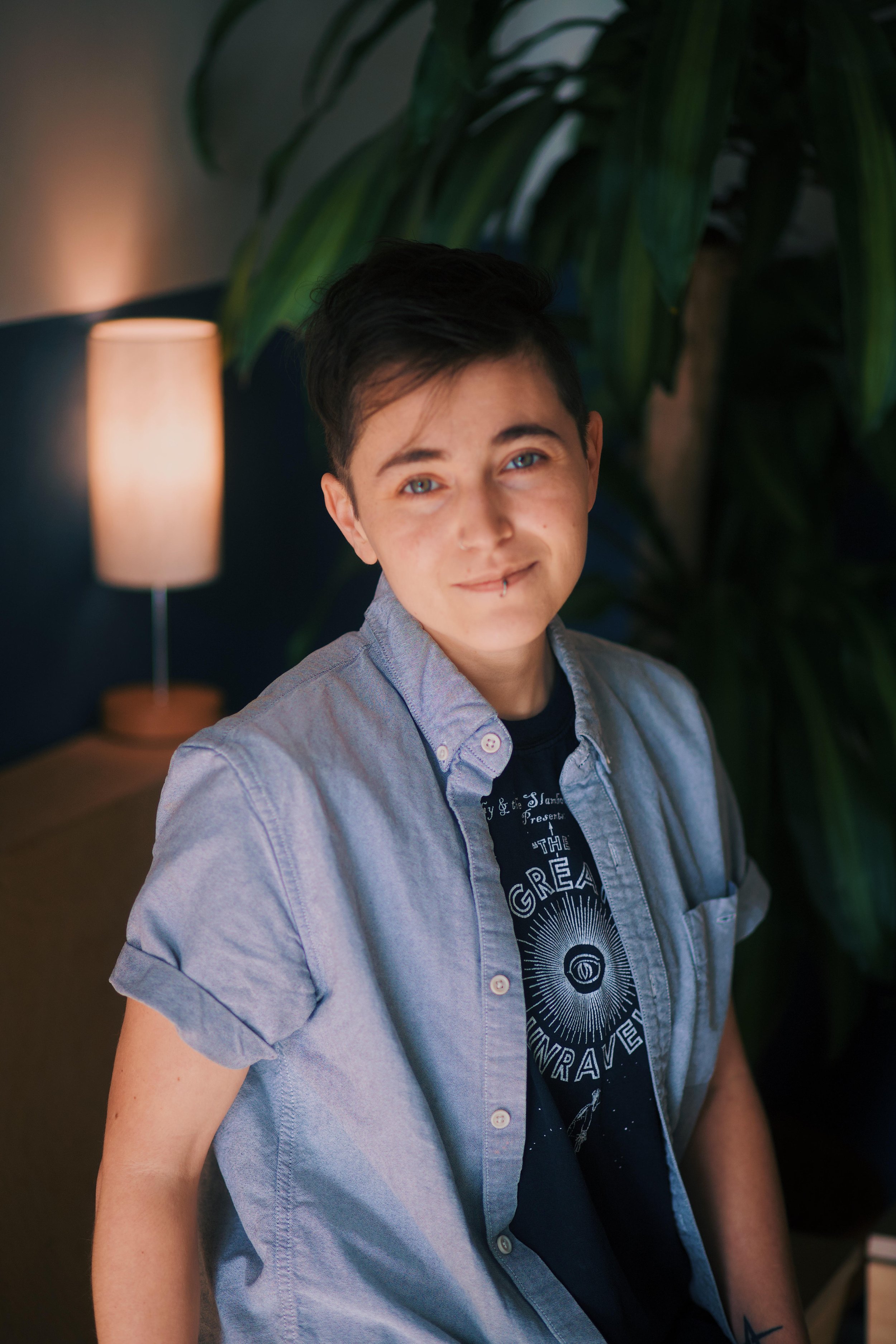
Hey, I’m Blake
It is a joy and an honor to walk alongside people into recovery from eating disorders, disordered eating, and perfectionism. I firmly believe that flexibility, wholeness, and connection are always possible. My approach to psychotherapy aligns with my approach to all of life: people matter deeply and are worth getting to really know. For those who struggle with performativity, internal and external disconnection, and overcontrol, it can feel like who they truly are is lost in the pursuit of safety through self-curation. The trouble is that everyone needs help and it’s impossible to help someone who is hidden. The self-scrutiny and self-abandonment that exist in eating disorders, disordered eating, and perfectionism can block people from knowing, noticing, and relating to and as themselves. My passion is helping you discover, share, recover, and grow yourself. For real progress to happen in recovery, there has to be something recovered, something gotten back. I can’t do recovery for you but no one does it alone. My aim for my clients is that through our work together, they can get back honest and worthwhile relationships with themselves, their bodies, other people, and the world around them. Whether we work together or not, I believe in you and am holding hope for your recovery.
~Blake Marcelle, Virginia LPC Resident supervised by Joanne Paek
What’s Threptikos?
Threptikos, θρεπτικός, is a word that has existed since ancient times in Greek and is still used today. It means nourishing, healing, able to nourish. At the heart of many eating disorders is an experience of inability to peacefully take in nourishment from food, relationships, and life. While I am not a dietitian and won’t be giving meal plans or recipes, our job together is, in part, to restore your ability to find and take in what nourishes you. Even when in relationship with others or engaged in creative, intellectual, or spiritual pursuits and passions, eating disorders can cause a rejection of their psychologically nourishing aspects. My hope is that the work we do in therapeutic sessions can support you in a new way of engaging, one where you feel able to find what you need and take it in.
Anxiety, perfectionism, self-judgement, and fear of emotion can serve as protection from uncertainty, vulnerability, and overwhelm. They don’t work that way forever and they never generate real freedom. Rigidity doesn’t allow for nourishment. The ethos of nourishment in my practice is informed by the tenants of Radically Open Dialectical Behavioral Therapy (RO-DBT), psychodynamic psychotherapy, Internal Family Systems, Gestalt, Cognitive Behavioral Therapy, and Hakomi. To recover the capacity to seek and accept nourishment physically, emotionally, and psychologically requires flexibility, self-understanding, untangling habituated patterns of thought and action, and working compassionately with barriers. As a clinician, I believe that everyone can foster those capacities in therapy and that recovery, while different for each person, is always possible for anyone.